Etsy

Monday, 19 November 2012

The most difficult musical instrument to play


The most difficult musical instrument to play is the Rimzeninger Organ, developed by renowned musicologist Otto Rimzeninger in 1897, it employs disused sewer tunnels or mineshafts to produce notes at volumes capable of knocking over a medium-sized cathedral, leading to it being recognised as a weapon rather than a musical instrument in Switzerland, Namibia and the American state of Indiana. It takes three people jumping in unison to sound one of the custom-built keys which are normally set up in a nearby field, or sports pitch, and the keys have to be at least 50 metres apart. At the last Rimzeninger concert, on 28th August 1924, it took 5 months to construct the organ, using a disused coal mine outside the City of Leeds in Britain; it took a further 3 weeks to tune the instrument, and the concert consisted of 4 movements over the course of fortnight, resulting in 9 deaths, 3 cave-ins, and £295, 876 worth of damage.

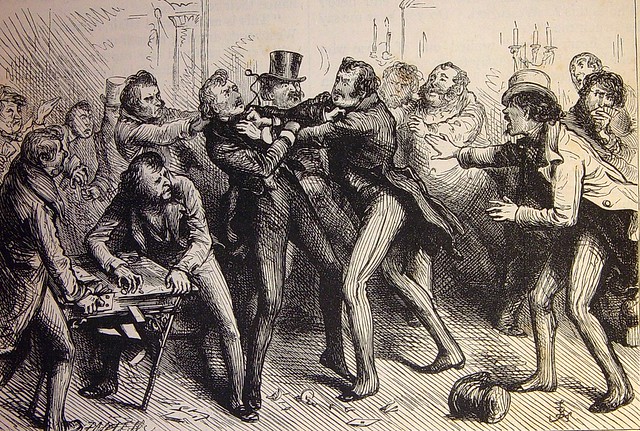
At a hearing to allocate compensation for the damage caused by the Rimzeninger Organ, Rimzeniger (pictured in the centre, wearing the top hat) arrived with a gang of "the Gentleman Brigands", a group of hard-drinking young aristocrats who were fans of his music and work. Rimzeninger then proceeded to direct them to attack anyone at the hearing who insulted his composition. Rimzeninger and the Gentleman Brigands were later given "stern rebukes" by the local police. Photograph by El Bibliomata.
 ©2012 James Mathurin

Monday, 12 November 2012

The inventions of Dimitri Dutruv Pt. 7

Dipping back into the research and experimentation files of Dimitri Dutruv, we find his files relating to his work with comatose medical patients. This became an issue close to Dutruv's heart, as so many of his devices seemed to result in, at best, comas

Dutruv was convinced that there was a flaw in the normal encouragement of patients' families to spend time with them, talking to them, and also reminding them of fondly-held memories from their life. 

In his notes, Dutruv writes,
"The patients are besieged with an endless parade of comforting memories, relaxing, familiar voices, even pleasant smells. Isn't this how we might soothe an infant to sleep? Where are the thins that wake us from wonderful dreams? Where are the biting insects? Where are the screaming children? Where are the cold, sharp, elbows of our bed-sharing spouse?"
Dutruv, theorising that it is harder to sleep when being annoyed, developed a programme for treating comatose patients by a systematic programme of annoyances:
  • Mechanised poking machines;
  • Regularly shifting room 'super-odourisers", including the scents of rotten fish, animal excrement, and acrid smoke;
  • Bedsheets treated with itching powder;
  • Taped recordings of babies screaming, annoying songs, and various recordings which came to form part of the Now, That’s What I Call Animals Getting Slaughtered series.
 
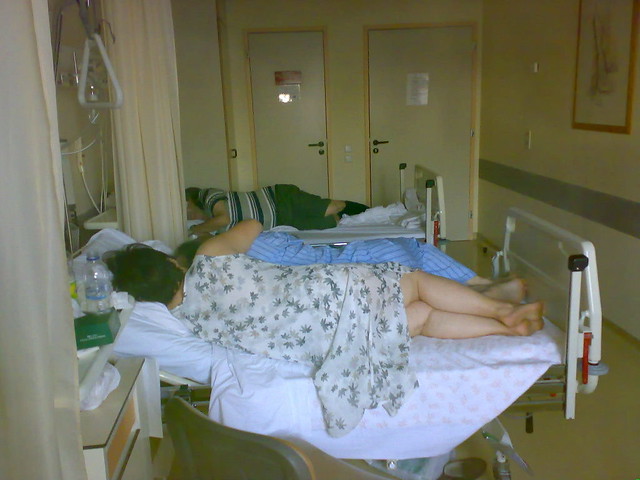
One of the coma wards where Dutruv carried out experiments of his coma programme. These women were dressed in materials and patterns which they disliked, while the room was filled with the scent of rotten eggs. After 3 month, the test was ruled unsuccessful, and the ward was closed for 3 months for fumigation. This particular round of tests was in a Greek hospital. Photograph by RobW_.
©2012 James Mathurin

Sunday, 4 November 2012

The world’s most lethal cinema


The world’s most lethal cinema was the “Airborne Cinematico Fantastiquement” of Porto. It was open from June 1968 until August 1972, when it closed after causing 522 deaths. The cinema consisted of a large, multi-directional projector on the top of a tower block, which projected films onto the bottom of a cargo plane, which would circle above the  tower block, with the film projected onto it’s belly, while the crowd watched from below, listening with speakers placed around the roof. On it’s final show, a flock of geese flew past the plane, and several were sucked in to the engines, causing the plane to crash into one block of flats, knocking it down, while flaming goose corpses hit the projector, causing it to explode, killing the cinema-viewers on the roof, and setting fire to the building they were on. The owner and inventor of the Cinematico, Pedriquo Massinite, lamented, “I am ruined. I hold the patents for the ACF system, but who will want to run a cinema that devours it’s customers?”

This is a view of the neighbourhood which the "ACF" circled over during its shows. The cargo plane would fly in from outside of the city, to circle the large building in the centre of the picture, with the banner on it. Photograph by Luiz Fernando / Sonia Maria.

 ©2012 James Mathurin 

Monday, 29 October 2012

The youngest case of steroid use

The youngest case of steroid use in a sporting event was when Anwar al Hadat was found to have used the banned steroid Nandrolone, in the three-legged race at his Turkish school’s Sports Day in 2003. He was aged 6 years and 122 days at the time.
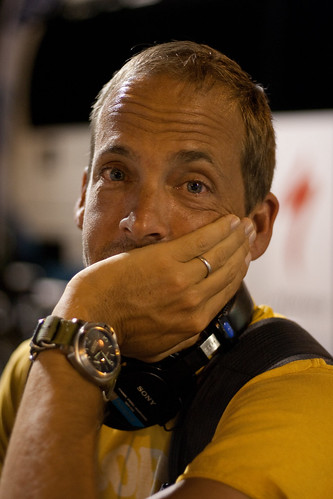
Hasim Uyger, father of one of the other boys at the sports day, who lost out to al Hadat. Interviewed when news of the doping came out he said,
"How do I feel? I felt excited at first, that maybe I had seen a great athlete of the future. Now I feel disappointed that my boy was robbed of third in the sack race."
 Photograph by bgrimmni.


 ©2012 James Mathurin 

Sunday, 14 October 2012

The biggest ever mushroom omelette


The biggest ever mushroom omelette covered an area of 0.73 square miles, and was formed by a gas explosion at a farm just outside of Leipzig, Germany in 1974. The farmer, Helvig Kreucker, said, “I am relieved that the omelette has been declared a record breaker, as I am hoping I can use it to finance the repairs to my chicken coop and greenhouse. There was a fear that the judges would refuse to recognise it as an omelette at first, due to the hole in the middle the explosion made. Some of them wanted to call it some kind of donut, but fortunately, they relented.”

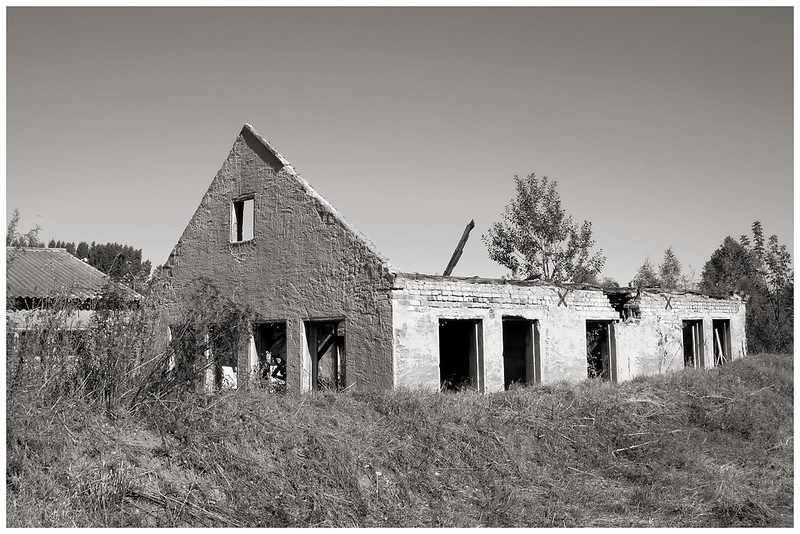
Kreucker's barn, where the omlette-causing explosion originated. This photograph was taken by an insurance assessor, after the egg had been cleaned up. Photograph  by dé.wé..
 ©2012 James Mathurin 

Monday, 1 October 2012

The largest scale apology

For 3 months in the Summer of 1864, the Principality of Montenegro carried out what is, in the eyes of most scholars, the largest apology on record. 

During the period of June to August of that year, the lyrics of the national anthem were changed to give an official apology to the Spanish government, for the accidental arrest and execution of their ambassador, Miguel Ballasteros, in March of that year.

With their vulnerability to an attack along their Mediterranean coastline, the Montenegrins made the decision to carry out a daily rendition

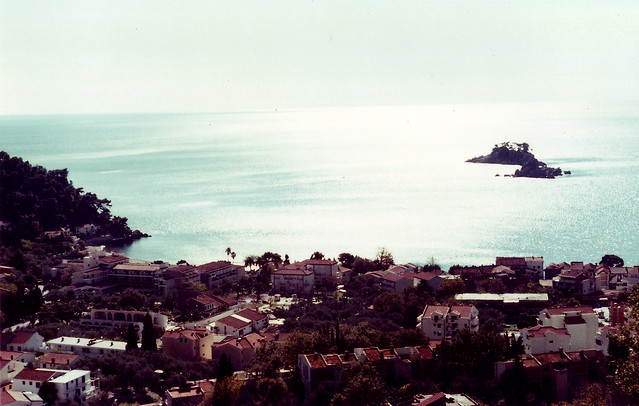
This bay was the site of the final apology / anthem, on 17th August 1864. One resident, whose name was given as Igor Tuden, said, "While it hurt my national pride to sing such a shanty, I will miss it." Photograph by k.ivoutin.
  ©2012 James Mathurin 

Sunday, 9 September 2012

Another contender for best lie

In 1988, Governor Peter Mintrell, of New Jersey, found himself running for re-election against Cherie Switzler, the prostitute he’d been caught having sex with in the back of his official limousine 3 months previously, the scandal of which had led to the snap election. Mintrell had attempted to play the incident down, claiming at a press conference that he had been forced to sleep with the prostitute because of ‘a hysterical psychological condition she suffers from, which sends her into fits which can only be prevented by sexual intercourse.’ Mintrell, with his wife Sally by his side, further claimed that his limousine had only been in Switzler’s vicinity because his driver, Ernie Ballenti, had taken a detour to pick up a sick relative who lived there, leaving Mintrell alone in the car when he saw Mss. Switzler going in to convulsions.  
“I pulled her into the limousine because I thought she’d have less chance of injuring herself on the leather seats than if I left her on the sidewallk,”
he said, continuing, 
“Once in the limousine, I recognised her symptoms from a Discovery documentary I’d seen the week before, and knew that, no matter how uncomfortable I felt with it, my having sexual intercourse with this young lady may well have been the only way to save her life.”
Switzler entered the election race as an Independent, under the slogan ‘I’ve swallowed a lot of things, but I wouldn’t swallow that story.’ She pulled out of the race when Mintrell offered her a position on his staff.

©2012 James Mathurin