Etsy

Saturday, 3 July 2010

Prehistoric citrus art

An archaeological expedition in Southern Greece was surprised to find evidence of a prehistoric tribe who used citrus fruit to record images. It is believed that this was intended as a means of leaving secret messages to shy gods, as, much as children often use lemon juice to write 'disappearing ink' messages, these cave paintings only became visible when exposed to a heat source. This tribe was believed to worship a deity known as Schmoonktis, which was easily startled, and would answer any prayers that were left in a suitably peaceful way. According to depictions on the cave walls, Schmoonktis appeared as some kind of animal, similar to a squirrel, or perhaps a stoat.

Images of the paintings, which only became visible when one of their discoverers set up his portable stove to make some grilled Tuna sandwiches in the cave. The ambient heat was sufficient to cause a chemical reaction, which made the paintings visible again. Photograph provided by  Klearchos Kapoutsis.

 ©2010 James Mathurin

Sunday, 27 June 2010

The inventions of Dimitri Dutruv Pt. 2

Continuing the collection of inventions developed by Dimitri Dutruv, we now move onto the APG (Automatic Platitude Generator). In 2003, Dutruv was charged with developing a machine for automatically writing messages in greeting cards. Creating a series of stamps on rotating gears, with words like "best", "mum", "sweetest", "forever", "teacher", "pearly-lipped", "mechanic", "sorry", "niece", "this year", "tender", which could be printed into any card. It also featured a pulping chamber where cards, paper and leaflets could be fed in and mashed up to make new colours.

Although Dutruv believed that it could have been developed into a perfectly effective working model, his prototype cards were not to the satisfaction of the investor, due to what Dutruv described as "a currently unmanageable platitude randomisation factorisation."

One of the prototype cards produced by the APG. Unfortunately, it was supposed to be a 'commiseration card for the death of a grandparent', but appeared with this design, and the message, "Sweet tender Yom Kippurs, Auntie!" Image supplied by Boby Dimitrov.


©2010 James Mathurin

Wednesday, 3 February 2010

The Great Sydney Nick-name war

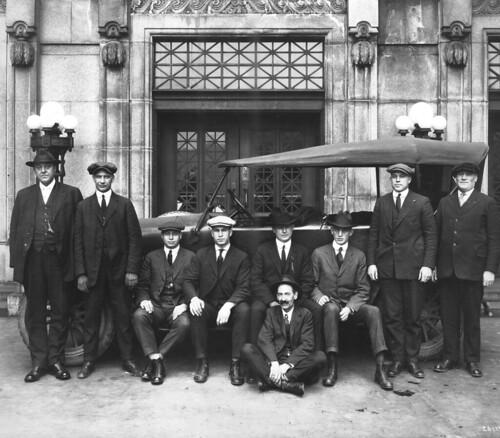
In Australia, in 1920, Sean McGrady, a renowned knife-fighter was so in demand by rival gangs that their assurances of money, power and women became so evenly matched that the only way of settling it was for each gang to use the local newspaper under their control to run a competition asking readers to send in nicknames that McGrady could have.

In a move that stunned both the readership, and the gangs in question, McGrady  was, according to friends, so impressed by the entries on either side that he decided to start his own gang, instead of joining the others, so that he could hand out the nicknames to members of his new gang. This instigated a period of violent conflict between the gangs, which came to be known as the Great Sydney Nick-name war.

McGrady's new gang came to include members like Eyebrows McGhee, the Doyle brothers, Patches and Six-Toes, Seamus The Hat, Mike "Bollock-Punching" Thomas, Trousers McGoldrick, Patrick Three-Hats, Sausages Hoolihan, 3-Card Monty O'Hanlon, Devilled Eggs O'Connor, and his sister Devilled Ham, Toe Caps Pritchard, Meat Hook O'Shaughnessy, Pickles McGuinness, Five-Beers Burlington and Terrence 'Stinky' Calhoon.

 McGrady (fourth from the right, seated on the car), pictured in 1921, with several of his lieutenants. Photo from the SMA archive.


©2010 James Mathurin

Thursday, 28 January 2010

Laboratory taken over by Capuchins

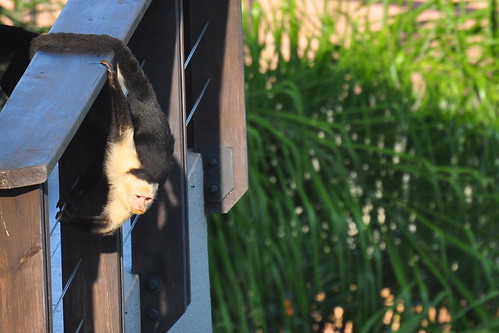
In September of 2004, a group of scientists working in Honduras were evicted from their research station in the forest outside of Tegucigalpa by a troop of Capuchin monkeys. Kristophe Frinks, a laboratory assistant who lost a finger in the attack, commented in an interview with the Telegraph Food magazine a year later,

 "Capuchins are actually very intelligent. They use tools and even show signs of self-awareness. In retrospect, we needed to work with more stupid monkeys."

Henley, one of the beta males of the troop, is pictured here guarding the complex from the assembled press. Shortly after this photograph was taken, phtotgraphers were driven back by a shower of large seeds, broken laboratory equipment and monkey faeces. From the photographic archive of  kansasphoto.

©2010 James Mathurin

Wednesday, 20 January 2010

The Inventions of Dimitri Dutruv, Pt.1

Dimitri Dutruv is regarded by some as a man who could have been one of the greatest inventors ever. In fact, as researcher, Dale Egret, said,
"Dutruv could very well be termed as "The Greatest Inventor Who Never Was." His work will never be fully understood, unfortunately, due to the circumstances of his death, but what we do know shows us a fascinating picture of an uncommon inventive mind, who could possibly have revolutionised modern engineering if he and his work had survived."
In October 1996, Dutruv was killed on his way to the patent office, when he was struck by a removal van, crossing the road. The removal van crashed and exploded, consuming Dutruv's portfolio of engineering designs, with the exceptions of a few conceptual drawings and documentary photographs, some of which will occasionally be chronicled here.

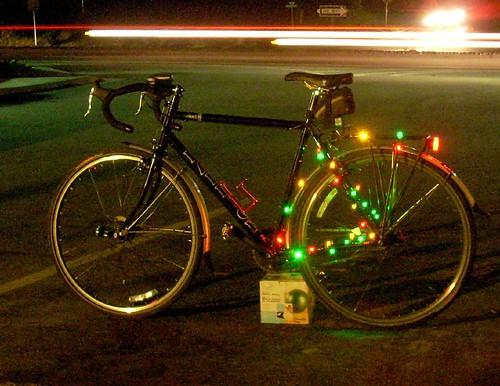
Figuring that there are reputed to be few animals more sure-footed than Mountain Goats, Dutruv was inspired to develop a mountain bike with hooves on wheels. Examination of Dutruv's accounts showed that he had spent 5 months contacting butchers around the world, aquiring and experimenting with the hooves of different animals.

A design photograph recoved from Dutruv's house, depicting a bicycle frame used for research purposes, using LEDs to pinpoint potential points of what Dutruv termed "hooval-augmentation." The photograph was passed onto design firm richardmasoner, to see if it could be used to recreate Dutruv's designs.

©2010 James Mathurin

Wednesday, 13 January 2010

Least succesful telemarketing campaign

The least succesful telemarketing campaign was run by the charity Bathrooms for Bitches, a charity supporting dogs abandoned due to incontinence. After 17 unsuccessful mail and telephone campaigns, in 2003 they brought on the 'Performing Arts-based fundraising team' of Miller and Barnes.

Speaking later in Marketing Bugle in July 2006, Matthew Miller of Miller and Barnes said,
"Our scheme involved the callers telephoning potential supporters, and howling down the phone at them, like an incontinent bitch. We spent weeks perfecting the pitch and timbre of incontinent bitches of various breeds, and the campaign raised 213 complaints, 19 criminal charges and 44 civil cases."


Staff at Miller & Barnes, pictured during the Bathrooms For Bitches campaign. Staff had to be trained specially to ensure that their howling did not exceed 100decibels. Jermaine Beckwithe, one of their callers, remembered, "Some days you would get home and all you could hear was the howling and whining." Picture provided by HowardLake.


©2010 James Mathurin

Wednesday, 6 January 2010

Largest kitchen and toilet paper roll sculpture


The largest sculpture made out of kitchen and toilet paper rolls was a 1:1 scale model of Egypt’s Great Pyramid, constructed in Valencia, Spain by Hercules Boroquez in May 1996. He sent out a Press Release saying, “After my scale model of the Louvre, made of novelty Easter wrapping paper, complete with Mona Lisa was destroyed in the Madrid monsoon of ’89, I have laboured to prove that the elements shall not hold sway over my artistic vision!” The structure stood until late November, when mist caused the paper rolls to inflate, and eventually collapse under their own weight.

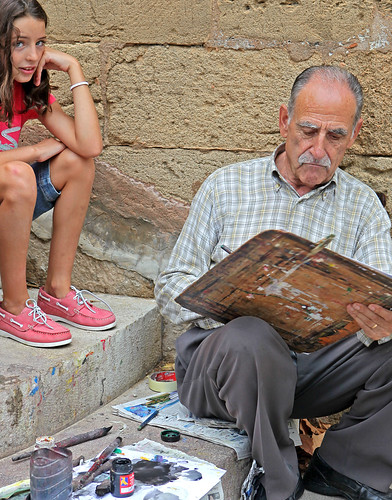
Boroquez, pictured preparing for the 1997 Spanish Exposition, where he talked about the experience of losing his Pyramid sculpture, and announced his decision to embark on a five-year project consisting of watercolours of paving stones. Photo by Bengt Nyman.

©2009 James Mathurin