Etsy

Monday, 24 December 2012

The worst ever game-show host


The worst ever game-show host was Mickie the Chinchilla. Given the presenting gig on the New Zealand show Dung or Dosh in 2004 on the strength of winning pet talent show And He Can Lick Himself Too…., Mickie was shocked by the loud applause of the crowd, and spent the show urinating frequently in a panic, biting 3 contestants and eventually dying of a heart-attack when an on-stage pyrotechnic went off by mistake.
A publicity photograph of Mickie, which his agent Sam Mackie circulated to the press for use in obituaries. In a statement, he said,
"Mickie had a tiny body, a smooth coat, and one of the biggest bloody hearts ever. He had a great future in front of him."
 Photograph by Greencolander.

©2012 James Mathurin

Monday, 17 December 2012

The poorest selling specialist magazine


The poorest selling specialist magazine ever was Lever-Arch Folder Fanciers Quarterly, a magazine that promised, “an in-depth and enthusiastic quarterly overview of the erotic side of office stationary.” It ran for fifteen minutes in June 1965, and only 17 copies reached the shops. The publisher, Orange Hotchkiss ltd., issued a statement saying, “We apologise to anyone offended by the magazine, please be assured it was only ever put into print due to an administrative error, and we cancelled it as soon as one of our technicians realised what was happening.” Despite this, one of the 17 copies recently sold on eBay for £72.22 to a collector in Mozambique.
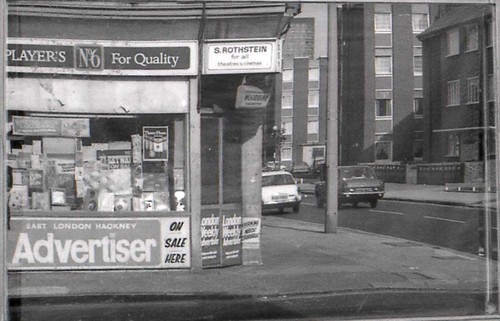
S. Rothstein newsagents, one of the few shops which received a copy of Lever-Arch Folder Fanciers Quarterly. The proprietor has always refused to speak of the magazine, and when her son, Oscar, took over the business in 1979, he suggested that Orange Hotchkiss ltd. had forced his mother to sign some form of gagging agreement, possibly in return for paying for his university fees. Photograph by sludgegulper.

©2012 James Mathurin

Monday, 10 December 2012

The most forgettable song lyrics


The most forgettable song lyrics ever were in the song Municipal Delivery Systems Rock ‘n’ Shuffle, a song specially composed for the 1986 convention of Bremen Council Administrators in Rome, Italy. It was commissioned from composer Ayre Erdberdschen, who complained, “It was full of lists of tedious things I had to include, like offset wastage management forms. I tried my best, but the song was so tedious I found it impossible to commit to memory. Pieta, my singer had to have the lyrics in front of her, no matter how often she rehearsed it.” The song proved so forgettable that Erdberdschen was sued by Bremen Council for not performing the song at the convention, although in court, audio recordings proved that the song was performed with 2 encores, but had been instantly forgotten by all present.
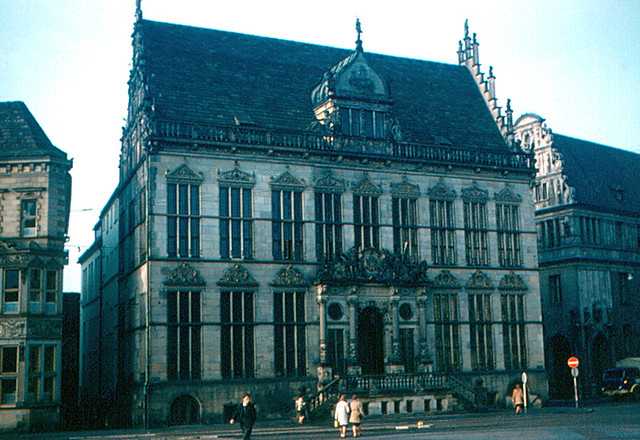
The Schütting, in Bremen, where the Bremen Council Administrators convention was held. The strange amnesiac effect of Erdberdschen's lyrics was linked to an increase in traffic-related accidents on the roads outside it, as excerpts from the lyrics were printed on billboards around the building. Several motorists who had been considered responsible for the accidents mentioned temporarily forgetting how to drive as they glanced at the billboards. Photograph by roger4336.
 ©2012 James Mathurin

Monday, 3 December 2012

The longest ever wait for a bus

The longest ever wait for a bus was endured by Louisa Bacheaux, in a suburb of Regina, in Canada. After arriving at a bus stop on the morning of May 15th, she then waited for 8 weeks and 5 days for her bus, with her family being forced to bring her food and supplies throughout. It transpired that, due to a bureaucratic oversight, some 17 bus stops had been installed, and timetables and promotional material sent out, but 6 months before buses were built. Although it was not until 2 weeks after Bacheaux began her wait that this was recognised,she refused to leave the stop, saying,
"I've been waiting for my bus for two weeks now, the timetable says 10-15 minutes, and I'm not leaving until it arrives."

Bacheaux's family's dog, Blancie, who carried many of her supplies to and from her home to the bus stop on a wagon built by her son, Max. Photograph by GIANTsqurl.

  ©2012 James Mathurin 

Sunday, 25 November 2012

The world’s smelliest piece of art


The world’s smelliest piece of art was Self-portrait in Tofu, a sculpture by Dutch artist Kurzt Voegells. Although relatively odour-free when it was first exhibited in May 2003, it soon began to decompose, and caused the entire Anstschlogge gallery of Eindhoven to be evacuated between the 4th and 7th of September that year. After it was destroyed in a controlled explosion, Voegells announced, 
“I had not planned for this, but I feel it came to express the disgust I feel for society far more poetically than my food-sculpting abilities could possibly have expressed.”
Dutch police evacuate the area around the Anstschlogge gallery on June 15th 2003, immediately before Self-portrait in Tofu was destroyed. Riot police were required, as the horrible smell was deemed to be responsible for 17 separate scuffles and 2 small riots breaking out. Photograph by Karen Eliot.
 ©2012 James Mathurin

Monday, 19 November 2012

The most difficult musical instrument to play


The most difficult musical instrument to play is the Rimzeninger Organ, developed by renowned musicologist Otto Rimzeninger in 1897, it employs disused sewer tunnels or mineshafts to produce notes at volumes capable of knocking over a medium-sized cathedral, leading to it being recognised as a weapon rather than a musical instrument in Switzerland, Namibia and the American state of Indiana. It takes three people jumping in unison to sound one of the custom-built keys which are normally set up in a nearby field, or sports pitch, and the keys have to be at least 50 metres apart. At the last Rimzeninger concert, on 28th August 1924, it took 5 months to construct the organ, using a disused coal mine outside the City of Leeds in Britain; it took a further 3 weeks to tune the instrument, and the concert consisted of 4 movements over the course of fortnight, resulting in 9 deaths, 3 cave-ins, and £295, 876 worth of damage.

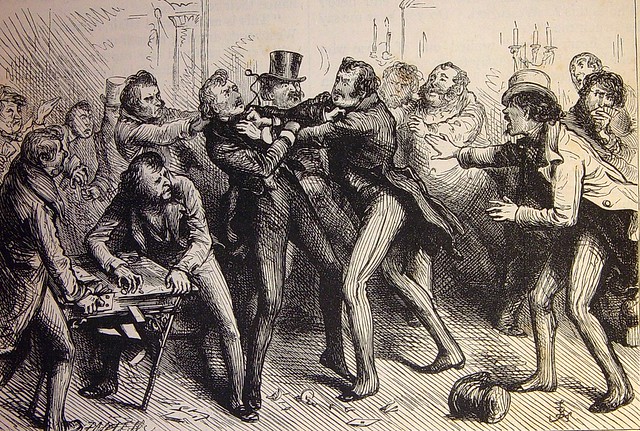
At a hearing to allocate compensation for the damage caused by the Rimzeninger Organ, Rimzeniger (pictured in the centre, wearing the top hat) arrived with a gang of "the Gentleman Brigands", a group of hard-drinking young aristocrats who were fans of his music and work. Rimzeninger then proceeded to direct them to attack anyone at the hearing who insulted his composition. Rimzeninger and the Gentleman Brigands were later given "stern rebukes" by the local police. Photograph by El Bibliomata.
 ©2012 James Mathurin

Monday, 12 November 2012

The inventions of Dimitri Dutruv Pt. 7

Dipping back into the research and experimentation files of Dimitri Dutruv, we find his files relating to his work with comatose medical patients. This became an issue close to Dutruv's heart, as so many of his devices seemed to result in, at best, comas. 

Dutruv was convinced that there was a flaw in the normal encouragement of patients' families to spend time with them, talking to them, and also reminding them of fondly-held memories from their life. 

In his notes, Dutruv writes,
"The patients are besieged with an endless parade of comforting memories, relaxing, familiar voices, even pleasant smells. Isn't this how we might soothe an infant to sleep? Where are the thins that wake us from wonderful dreams? Where are the biting insects? Where are the screaming children? Where are the cold, sharp, elbows of our bed-sharing spouse?"
Dutruv, theorising that it is harder to sleep when being annoyed, developed a programme for treating comatose patients by a systematic programme of annoyances:
  • Mechanised poking machines;
  • Regularly shifting room 'super-odourisers", including the scents of rotten fish, animal excrement, and acrid smoke;
  • Bedsheets treated with itching powder;
  • Taped recordings of babies screaming, annoying songs, and various recordings which came to form part of the Now, That’s What I Call Animals Getting Slaughtered series.
 
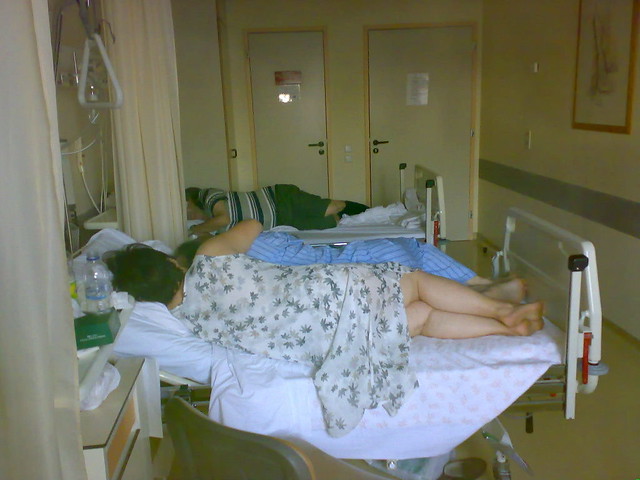
One of the coma wards where Dutruv carried out experiments of his coma programme. These women were dressed in materials and patterns which they disliked, while the room was filled with the scent of rotten eggs. After 3 month, the test was ruled unsuccessful, and the ward was closed for 3 months for fumigation. This particular round of tests was in a Greek hospital. Photograph by RobW_.
©2012 James Mathurin