Etsy

Monday, 18 February 2013

Landmine Challenge - the Boardgame


Landmine Challenge!’ is generally considered to the the worst toy ever - a board game based on “the skill and suspense involved in negotiating a mine field,” according to the description on the back of the box. The game comprised a 4 centimetre-thick board, decorated to resemble a minefield, and containing several small, pressure-sensitive explosive devices. A review in Board Gamer Monthly from November 1998 said, “Not only is this game tasteless, with the playing pieces being little blue, red, or green plastic Third-World children, whose limbs you must remove each time you lose a round, but the game is profoundly unsafe. To randomise the placement of the ‘landmines’, you are expected to load them into the base of the board and shake it vigorously, with often horrific consequences.” The producers of the game MS Funtime, hoped to resell the recalled games is countries with less stringent Public Health laws, but the warehouse where they were stored for shipping exploded in early 1999.
This toy shop in the South Coast UK town of Mordley was the scene of protests from residents and landmine charities soon after the release of Minefield Challenge. The shop's proprietor, Alan Mauspan, told the crowds on the third day,
"Look, I understand your outrage, and your disgust. I should have looked into the game more before I added it to the annual board-game tournament, but I'm planning to remove it, and replace it with a round of Cupcake Mayhem."
Photograph by morebyless.

 ©2013 James Mathurin

Monday, 11 February 2013

The first football club to be managed by a computer


The first football club to be managed by a computer was Worksop Town, whose chairman, Terrence Mawinney, insisted on installing the Artificintellimac 5.1 as manager after the club fired Peter Jacksmith from the position in the 1988/89 season. The computer, built my Mawinney’s company, Winneyworks, guided Worksop to third place in the Shamois Leather East Division, their highest position for 7 years, until it was corrupted by a virus, and substituted the left-winger for a cashier from the club shop, and sold the stadium’s goal-posts to hire a new physio. The Artificintellimac was removed as manager with five games of the season left, after being given the chairman’s “complete support.”
Terrence Mawinney is pictured here conducting a tour around Winneyworks' factory for potential investors. Many fans have suggested that Mawinney only installed the Artificintellimac as manager as a publicity stunt, but Mawinney's daughter suggested, in an interview with Techslice magazine, that Mawinney had, over his lifetime, developed an obsession with Artificial Intelligence, and sought out any opportunity to place computers into traditionally human roles. She also intimated that a "restricted area of the factory was devoted to an ultimately failed attempt to construct an "artificial wife" for Mawinney, according to his stipulations, one of which was an appreciation of football. Photograph by NRCgov.
 ©2013 James Mathurin

Monday, 4 February 2013

The world’s oldest chad


The world’s oldest chad is over 7, 000 years old. It was found by archaeologist Shrivnee Bambaclart, on a dig near the site of the Sphinx in Egypt in 2001. “I can categorically state that this is a chad, and not a simple disc of paper,” said Bambaclart, announcing her discovery, “Electron Microscope analysis of its edges reveals that it was punched and not cut from a larger sheet of papyrus. What is truly fascinating, though, is that it predates the use of papyrus in Egypt, and certainly predates the use of even the most primitive of hole-punchers. I truly believe that this may represent a link to the truth behind the legend of Atlantis.”
The chad is analysed under electron microscopes at laboratories in Cyprus in 2002. Bambaclart's team, afte confirming the age of the chad, are planning to return to the dig site to confirm rumours of similarly-aged staples. Photograph by Robert Scoble.

©2013 James Mathurin

Monday, 28 January 2013

The inventions of Dimitri Dutruv Pt. 8

Dutruv was called in, in 1999, to consult on suggestions for treatment for a phenomenon which was viewed, at the time, as some kind of mass hysteria. Several people... believed that they were fairytale characters. One subject believed he was the Gingerbread Man, and therefore refused to go into water, until he was allowed to bathe in liquid icing sugar.

It was first identified by doctors when a patient 'h' was admitted to hospital after having lost several of his teeth after biting into the brick wall of a house, which he believed was made of gingerbread.

Dutruv attempted to treat the patients by waiting for a patient to enter REM sleep, and then playing them a recording of the fairytale they had fixated on through speakers. He theorised that hearing "The End" would allow their subconscious mind to break out of the story.

The results were 1 revival, 1 revival then relapse, 2 comas, and one person suffered a psychotic break and killed a lumberjack.
Most of Dutruv's records were redacted under an anonymity agreement with the hospital, but this image of a patient listed as "BBW" was found in his records, labelled as being taken at 2:15am during REM therapy session 3 on 15th AUgust 1999. Photograph by thart2009.
©2012 James Mathurin

Monday, 21 January 2013

The worst fancy dress costume


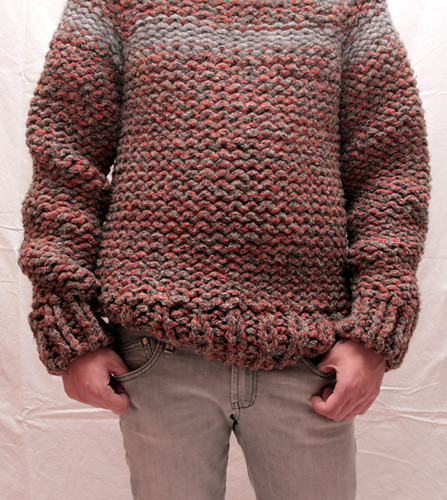
The worst fancy dress costume ever was worn by “Beard-Trimmer to The Stars” Barrington Menger, to a party thrown by Elton John in 1996. Menger turned up in slippers, corduroy trousers, a cotton shirt and a woollen pullover. He was asked to leave early due to an unusual odour that seemed to emanate from a green stain on his trousers. When asked what his costume was meant to be, he replied, “My uncle Mortimer. He was quite a character!”
Menger's pullover has gained cult status among some in fashion circles, and has been adopted as a template for 'ironic drabwear' by some designers. by matalafria knitwear barcelona.
©2013 James Mathurin

Monday, 14 January 2013

The earliest public transport network


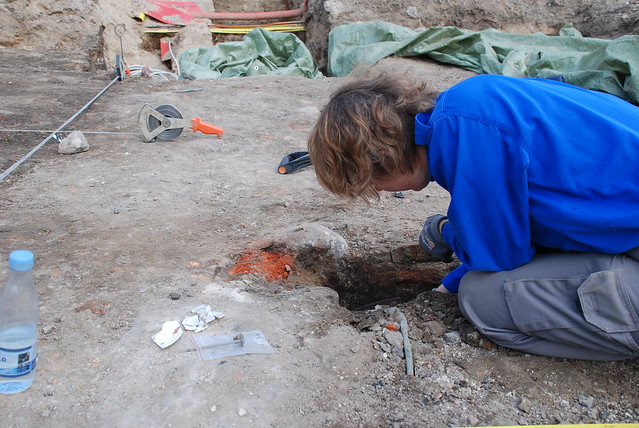
The earliest public transport network was a system of catapults unearthed in the ruins of the ancient Aztec city of Zingalamaduni, dated to around the 13th Century AD. With 17 temples and 3 palaces, it is believed that the catapults were devised to allow priests to perform several religious rites at different sites in quick succession, particularly at times of lunar or solar eclipse, when both sacrifices, marriages, baptisms and magistrates’ hearings would all be conducted within a very short time frame. It is believed that the system was abandoned after one disastrous eclipse, where a catapulting mix-up led to a groom being sacrificed, his bride-to-be being married to a new-born prince, a goat being baptised and the high priest being catapulted straight into the wall of a temple, killing him instantly.
This photograph shows a team of archaeologists excavating the Zingalamaduni site in 2003. The site was hailed by the dig's leader, Professor Bryan Philpot, as a "truly exciting find, especially when I was accidentally thrown 20 metres by a remarkably well-preserved catapult!" Photograph by Odense Bys Museer.
©2013 James Mathurin

Monday, 7 January 2013

The most sensationalist headline

The most sensationalist headline was “MACHETE FRENCHMAN TAKES QUEEN’S EAR!” It was published in the Tadworth Cavalier newspaper on 11th July 1987, when a photographer for the paper took a photograph of a French exchange student cutting corn with a knife in a field owned by the Royal family.
Dominic Garsteau, the French student who was implicated in the piece, posing for a photograph that accompanied an interview in the Tadworth Bulletin, a local rival to the Tadworth Cavalier, where he said he had been unaware of his notoriety until he returned home to Toulouse, and found out several of his relatives had been organising support for a petition to the British Embassy, in case he was imprisoned as a result of a "British tabloid campaign of fear". Photograph by Capt' Gorgeous.
©2013 James Mathurin